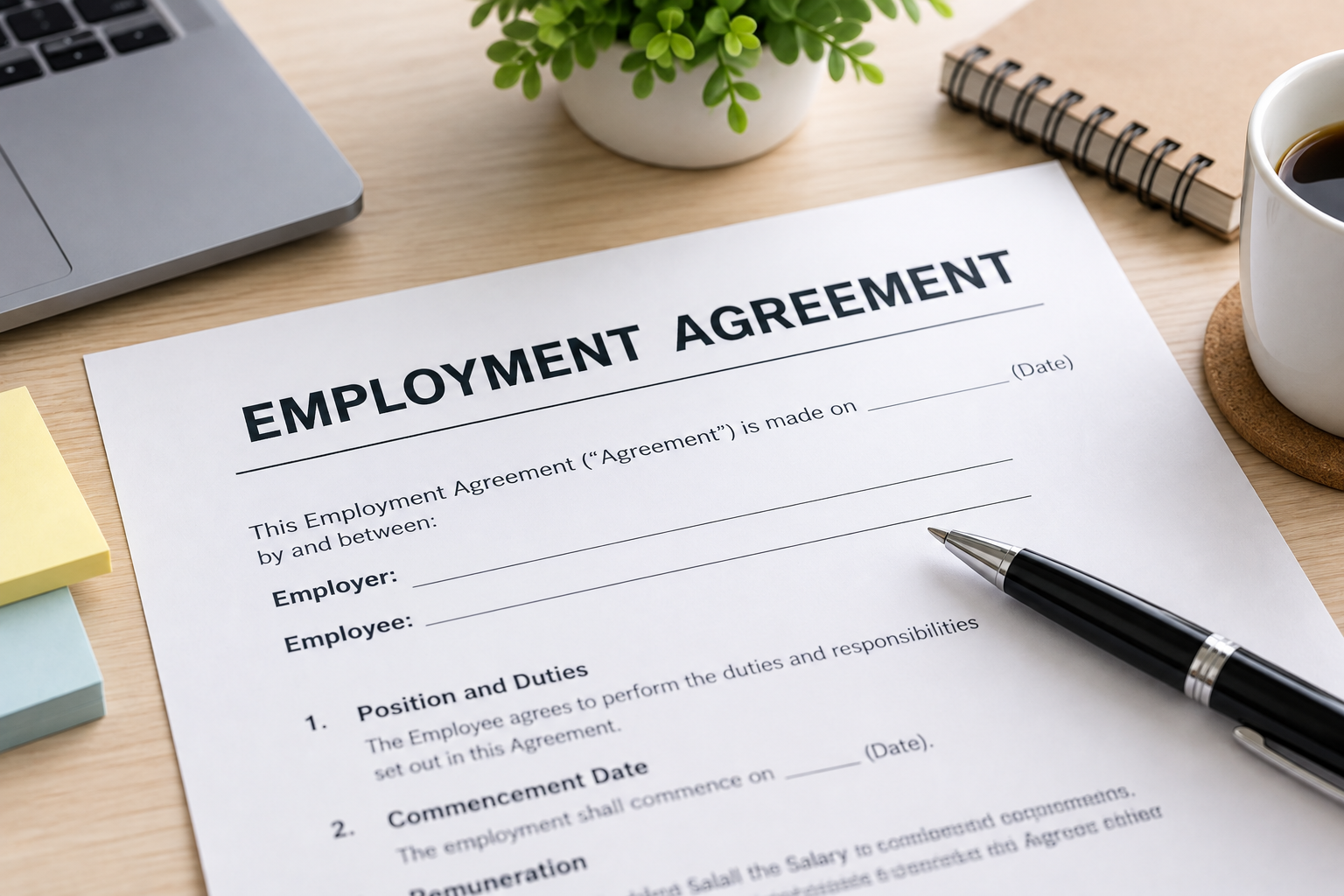
Hiring a domestic helper in Singapore involves more than finding someone who can manage your household. It is also important to establish clear expectations about salary, rest days, household duties, and other employment arrangements from the beginning.
One of the best ways to do this is through an employment contract for your domestic helper.
While migrant domestic workers (MDWs) in Singapore are not covered by the Employment Act, the Ministry of Manpower (MOM) encourages employers to sign a written employment contract with their MDW to help prevent misunderstandings and disputes. The contract should contain employment terms that are mutually agreed upon by the employer and helper.
If you are hiring a domestic helper for the first time, this guide explains why an employment contract is important, what it should contain, how rest days and termination arrangements should be handled, and what employers should discuss with their helper before signing.
Is an Employment Contract Necessary for a Domestic Helper in Singapore?

MOM encourages employers to sign an employment contract with their migrant domestic worker.
Although MDWs are not covered by the Employment Act, having a written contract provides a clear record of the employment terms agreed upon by both parties. MOM specifically recommends covering matters such as salary, placement loan, rest days, compensation for rest days, notice period and compensation in lieu of termination notice.
In other words, an employment contract for a domestic helper is an important practical document even though the employment relationship is not governed by the Employment Act in the same way as many other employment arrangements.
A written contract can help both the employer and helper understand:
- How much the helper will be paid
- When and how salary will be paid
- How rest days will be arranged
- What household duties are expected
- What happens if either party wants to end the employment
- Any other terms mutually agreed between the employer and helper
The aim is to make expectations clear before the employment relationship begins having a private and calm conversation with her.
1. It Sets Clear Expectations
A written contract allows you and your helper to discuss important employment terms before she starts working.
For example, you can clarify whether her main responsibilities include:
- General household cleaning
- Cooking and meal preparation
- Laundry and ironing
- Grocery shopping
- Childcare
- Infant care
- Elderly care
- Pet care
- Other household responsibilities
Clearly discussing these responsibilities can make it easier for both parties to understand what is expected.
2. It Reduces Misunderstandings
Verbal agreements can be forgotten or interpreted differently over time.
A written employment contract gives both the employer and helper a reference point if questions arise about salary, rest days, notice periods or other agreed arrangements.
MOM itself recommends drawing up an employment contract setting out terms such as wages, rest days, duties and notice for ending the contract to help avoid misunderstandings.
3. It Provides Clarity for Both Parties
An employment contract should not only protect the employer.
It should also give the helper a clear understanding of her employment arrangements.
For example, she should know:
- Her agreed salary
- Her rest-day arrangements
- Her main duties
- How employment can be terminated
- What compensation arrangements apply where relevant
This helps create a clearer working relationship between the household and the helper.
4. It Makes Changes Easier to Discuss
Household circumstances can change.
For example, a family may have a new baby, an elderly family member may require additional care, or the household’s daily routine may change.
Having clearly documented employment terms makes it easier to discuss and mutually agree on any changes.
What Should an Employment Contract for a Domestic Helper Include?
An employment contract should clearly state the terms and conditions agreed upon by the employer and domestic helper.
MOM recommends covering the following key areas:
| Contract Term | What to Clarify |
| Employer details | Employer’s relevant details |
| Helper’s details | Helper’s relevant identification details |
| Start date | When employment begins |
| Salary | Agreed monthly salary and payment arrangements |
| Placement loan | Applicable placement loan arrangements |
| Rest days | Number and arrangement of rest days |
| Rest-day compensation | Compensation where a rest day is worked |
| NOtice period | Notice required to end employment |
| Termination compensation | Salary in lieu of notice where applicable |
| Duties | Main household and caregiving responsibilities |
| Other arrangements | Other terms mutually agreed by both parties |
MOM specifically encourages employers to include salary, placement loan, number of rest days, compensation in lieu of rest day, notice period and compensation in lieu of termination notice in the employment contract..
Salary
Salary should be clearly discussed and documented before employment begins.
The contract should state the agreed monthly salary and payment arrangements.
Employers should also keep records of salary payments. MOM advises employers to pay their MDW on time and in full according to the agreed contract terms and not to withhold salary or make unauthorised deductions.all 999.
Rest Days
Rest days are another important part of a domestic helper employment contract.
An MDW is entitled to one rest day per week, with the specific day mutually agreed between the employer and helper.
If an MDW agrees to work on a rest day, the employer must compensate her with at least one day’s salary. However, at least one rest day each month must be provided and cannot be compensated away.
The rest-day arrangement should therefore be discussed clearly and reflected in the employment arrangements.
Rest days can also be arranged flexibly. MOM states that a rest day can be taken as one full day or two half days, subject to the applicable arrangements between the employer and MDW.
Placement Loan
If a placement loan applies, it should be clearly documented so that both the employer and helper understand the arrangement.
Avoid relying solely on verbal discussions when financial arrangements are involved.
Notice Period
The employment contract should state the notice period that applies if either the employer or helper wants to terminate the employment.
MOM states that either party can terminate the employment contract by giving the notice period stated in the contract. If the required notice cannot be given, salary in lieu of notice should generally be paid. The notice period can also be waived by mutual agreement.
Job Responsibilities
The contract or accompanying employment arrSome household expectations may be worth discussing before the helper begins work.
These can include:
- Cleaning responsibilities
- Cooking preferences
- Laundry and ironing
- Childcare arrangements
- Elderly-care responsibilities
- Pet-care responsibilities
- Household routines
- Use of appliances
- Communication preferences
- Personal time
- Privacy expectations
However, household rules should be reasonable and clearly communicated.
The purpose of documenting expectations is to create a better understanding between the employer and helper, rather than simply imposing conditions without discussion.
For example, if a helper is expected to prepare meals for an elderly family member, the employer should explain the person’s dietary requirements and daily routine.
Similarly, if childcare is part of the role, the family should explain the child’s routine, school schedule, and relevant responsibilities.
Employment Contract vs Safety Agreement: What Is the Difference?
An employment contract and a safety agreement are not the same document.
This distinction is important for employers hiring a domestic helper in Singapore.
Employment Contract
The employment contract sets out mutually agreed employment terms.
These may include:
- Salary
- Placement loan
- Rest days
- Rest-day compensation
- Notice period
- Termination arrangements
- Household duties
- Other agreed employment conditions
Safety Agreement
After discovThe safety agreement is a separate requirement.
MOM requires employers and MDWs to sign a safety agreement covering conditions for cleaning the exterior of windows. The agreement is intended to ensure that the applicable safety requirements are understood and followed.
For example, where an MDW is required to clean the exterior of windows in applicable situations, MOM’s rules include requirements concerning locked window grilles and adult supervision.
For first-time MDWs, the safety agreement is signed after the MDW has attended the Settling-In Programme and before she starts work.
Therefore, employers should not assume that an employment contract replaces the safety agreement.
What If You Hire a Domestic Helper Directly?

MOM encourages employers to sign an employment contract with their migrant domestic worker.
Although MDWs are not covered by the Employment Act, having a written contract provides a clear record of the employment terms agreed upon by both parties. MOM specifically recommends covering matters such as salary, placement loan, rest days, compensation for rest days, notice period and compensation in lieu of termination notice.
In other words, an employment contract for a domestic helper is an important practical document even though the employment relationship is not governed by the Employment Act in the same way as many other employment arrangements.
A written contract can help both the employer and helper understand:
- How much the helper will be paid
- When and how salary will be paid
- How rest days will be arranged
- What household duties are expected
- What happens if either party wants to end the employment
- Any other terms mutually agreed between the employer and helper
The aim is to make expectations clear before the employment relationship begins.
Why Is an Employment Contract Important for Your Domestic Helper?
A domestic helper becomes an important part of many Singapore households. Depending on the family’s needs, a helper may be responsible for cleaning, cooking, childcare, elderly care or a combination of these responsibilities.
Because every household is different, assumptions about duties and expectations can sometimes lead to misunderstandings.
An employment contract can help provide clarity from the beginning.
1. It Sets Clear Expectations
A written contract allows you and your helper to discuss important employment terms before she starts working.
For example, you can clarify whether her main responsibilities include:
- General household cleaning
- Cooking and meal preparation
- Laundry and ironing
- Grocery shopping
- Childcare
- Infant care
- Elderly care
- Pet care
- Other household responsibilities
Clearly discussing these responsibilities can make it easier for both parties to understand what is expected.
2. It Reduces Misunderstandings
Verbal agreements can be forgotten or interpreted differently over time.
A written employment contract gives both the employer and helper a reference point if questions arise about salary, rest days, notice periods or other agreed arrangements.
MOM itself recommends drawing up an employment contract setting out terms such as wages, rest days, duties and notice for ending the contract to help avoid misunderstandings.
3. It Provides Clarity for Both Parties
An employment contract should not only protect the employer.
It should also give the helper a clear understanding of her employment arrangements.
For example, she should know:
- Her agreed salary
- Her rest-day arrangements
- Her main duties
- How employment can be terminated
- What compensation arrangements apply where relevant
This helps create a clearer working relationship between the household and the helper.
4. It Makes Changes Easier to Discuss
Household circumstances can change.
For example, a family may have a new baby, an elderly family member may require additional care, or the household’s daily routine may change.
Having clearly documented employment terms makes it easier to discuss and mutually agree on any changes.
What Should an Employment Contract for a Domestic Helper Include?
An employment contract should clearly state the terms and conditions agreed upon by the employer and domestic helper.
MOM recommends covering the following key areas:
| Contract Term | What to Clarify |
| Employer details | Employer’s relevant details |
| Helper’s details | Helper’s relevant identification details |
| Start date | When employment begins |
| Salary | Agreed monthly salary and payment arrangements |
| Placement loan | Applicable placement loan arrangements |
| Rest days | Number and arrangement of rest days |
| Rest-day compensation | Compensation where a rest day is worked |
| NOtice period | Notice required to end employment |
| Termination compensation | Salary in lieu of notice where applicable |
| Duties | Main household and caregiving responsibilities |
| Other arrangements | Other terms mutually agreed by both parties |
MOM specifically encourages employers to include salary, placement loan, number of rest days, compensation in lieu of rest day, notice period and compensation in lieu of termination notice in the employment contract.
Salary
Salary should be clearly discussed and documented before employment begins.
The contract should state the agreed monthly salary and payment arrangements.
Employers should also keep records of salary payments. MOM advises employers to pay their MDW on time and in full according to the agreed contract terms and not to withhold salary or make unauthorised deductions.
Rest Days
Rest days are another important part of a domestic helper employment contract.
An MDW is entitled to one rest day per week, with the specific day mutually agreed between the employer and helper.
If an MDW agrees to work on a rest day, the employer must compensate her with at least one day’s salary. However, at least one rest day each month must be provided and cannot be compensated away.
The rest-day arrangement should therefore be discussed clearly and reflected in the employment arrangements.
Rest days can also be arranged flexibly. MOM states that a rest day can be taken as one full day or two half days, subject to the applicable arrangements between the employer and MDW.
Placement Loan
If a placement loan applies, it should be clearly documented so that both the employer and helper understand the arrangement
Avoid relying solely on verbal discussions when financial arrangements are involved.
Notice Period
The employment contract should state the notice period that applies if either the employer or helper wants to terminate the employment.
MOM states that either party can terminate the employment contract by giving the notice period stated in the contract. If the required notice cannot be given, salary in lieu of notice should generally be paid. The notice period can also be waived by mutual agreement.
Job Responsibilities
The contract or accompanying employment arrangements should clearly explain the helper’s main duties.
For example, a household employing a helper primarily for elderly care may have very different requirements from a household with young children.
Likewise, a family hiring a helper for infant care may need to establish expectations around:
- Preparing infant meals
- Feeding
- Bathing
- Laundry
- Cleaning baby items
- Supporting daily infant routines
The clearer the expectations, the easier it is for both parties to understand the role.
Should Household Rules Be Included in the Contract?
Some household expectations may be worth discussing before the helper begins work.
These can include:
- Cleaning responsibilities
- Cooking preferences
- Laundry and ironing
- Childcare arrangements
- Elderly-care responsibilities
- Pet-care responsibilities
- Household routines
- Use of appliances
- Communication preferences
- Personal time
- Privacy expectations
However, household rules should be reasonable and clearly communicated.
The purpose of documenting expectations is to create a better understanding between the employer and helper, rather than simply imposing conditions without discussion.
For example, if a helper is expected to prepare meals for an elderly family member, the employer should explain the person’s dietary requirements and daily routine.
Similarly, if childcare is part of the role, the family should explain the child’s routine, school schedule, and relevant responsibilities.
Employment Contract vs Safety Agreement: What Is the Difference?
An employment contract and a safety agreement are not the same document.
This distinction is important for employers hiring a domestic helper in Singapore.
Employment Contract
The employment contract sets out mutually agreed employment terms.
These may include:
- Salary
- Placement loan
- Rest days
- Rest-day compensation
- Notice period
- Termination arrangements
- Household duties
- Other agreed employment conditions
Safety Agreement
The safety agreement is a separate requirement.
MOM requires employers and MDWs to sign a safety agreement covering conditions for cleaning the exterior of windows. The agreement is intended to ensure that the applicable safety requirements are understood and followed.
For example, where an MDW is required to clean the exterior of windows in applicable situations, MOM’s rules include requirements concerning locked window grilles and adult supervision.
For first-time MDWs, the safety agreement is signed after the MDW has attended the Settling-In Programme and before she starts work.
Therefore, employers should not assume that an employment contract replaces the safety agreement.
Do You Need an Employment Contract If You Hire Through a Maid Agency?
Yes, having clear employment terms remains important even when you hire your domestic helper through an employment agency.
MOM states that employers can ask their employment agency to draft an employment contract for the employer and MDW.
A maid agency can help guide employers through the hiring and documentation process, but employers should still understand the terms they are agreeing to.
Before signing, take the time to review:
- Salary
- Rest-day arrangements
- Placement loan
- Job responsibilities
- Notice period
- Termination arrangements
- Other agreed conditions
If you are unsure about any part of the contract, clarify it before signing.
What If You Hire a Domestic Helper Directly?

Direct hiring does not mean that you should skip the employment contract.
If you have already found a helper and are managing the hiring process yourself, you should still ensure that the employment arrangements are clearly established.
The process can involve several steps, including:
- Confirming the helper’s employment terms
- Preparing the required documentation
- Applying for the Work Permit
- Arranging the required insurance and other requirements
- Completing the necessary onboarding processes
- Drafting and signing the employment contract
- Ensuring the helper understands the agreed arrangements
MOM’s hiring guidance specifically lists drafting the employment contract and signing the safety agreement as part of the hiring process.
For employers who prefer assistance with the administrative process, Grace Home provides direct hiring support for families who have already identified a domestic helper.
Learn more about direct hiring of a maid in Singapore.
What Happens If You Do Not Have a Written Contract?

Finding a suitable domestic helper is only one part of the hiring process. Employers also need to consider documentation, Work Permit requirements, employment arrangements, and the specific needs of their household.
Grace Home helps families in Singapore with domestic helper hiring and related services.
Indonesian Domestic Helpers
If you are considering an Indonesian domestic helper, Grace Home can help you explore suitable candidates based on your household’s requirements.
Explore Indonesian domestic helpers in Singapore.
Myanmar Domestic Helpers
Families looking for a Myanmar domestic helper can also explore candidates through Grace Home.
Explore Myanmar domestic helpers in Singapore.
Helpers for Elderly Care
If your household includes an elderly family member who requires additional assistance, choosing a helper with suitable caregiving experience can be important.
Learn more about maids for elderly care in Singapore.
Helpers for Infant Care
Families with babies may have different requirements from households that primarily need general housekeeping support.
Learn more about maids for infant care in Singapore.
Direct Hiring Support
Already found a domestic helper you would like to hire? Grace Home also provides support for direct hiring.
Learn more about Grace Home’s direct hiring service.
Not sure which type of domestic helper is right for your family?
Speak with Grace Home about your household needs and explore your hiring options.
Frequently Asked Questions About Domestic Helper Employment Contracts
Is an employment contract required for a domestic helper in Singapore?
Migrant domestic workers are not covered by Singapore’s Employment Act. However, MOM encourages employers to sign an employment contract with their MDW to establish mutually agreed employment terms and help prevent disputes.
What should an employment contract for a domestic helper include?
MOM encourages employers to include salary, placement loan, number of rest days, compensation in lieu of rest day, notice period and compensation in lieu of termination notice. Employers can also clearly document the helper’s main household duties and other mutually agreed arrangements.
Can a maid agency prepare the employment contract?
Yes. MOM states that employers can get their employment agency to draft an employment contract for the employer and MDW.
Should rest days be included in the domestic helper employment contract?
Yes. Rest-day arrangements are an important part of the employment terms. MDWs are entitled to one rest day per week, and at least one rest day each month cannot be compensated away.
Can an employment contract with a domestic helper be changed?
Employment circumstances can change, and the terms can be updated when both employer and helper mutually agree to new arrangements. It is advisable to keep significant changes in writing.
Is the employment contract the same as the safety agreement?
No. They are separate. The employment contract covers mutually agreed employment terms, while the safety agreement covers specific safety requirements, including conditions relating to cleaning the exterior of windows.
Do I need an employment contract if I hire a helper directly?
An employment contract remains important when hiring directly. MOM’s hiring guidance includes drafting an employment contract and signing the safety agreement as part of the hiring process.
What happens if my helper and I disagree about the contract?
Start by discussing the specific term that is causing the disagreement and refer to the agreed employment terms. If the issue cannot be resolved, employers can refer to MOM’s resources on resolving disputes with their MDW or employment agency.
Is an Employment Contract Important for Your Domestic Helper?

Yes, having clear written employment terms can make the working relationship easier for both employers and domestic helpers.
A domestic helper employment contract gives both parties a clear understanding of important matters such as salary, rest days, placement loan, household duties and termination arrangements.
It can also reduce misunderstandings by putting important agreements in writing.
Most importantly, the contract should be based on terms that are clearly understood and mutually agreed upon by the employer and helper.
If you are planning to hire a domestic helper in Singapore, Grace Home can help you understand your hiring options and find a helper suited to your household’s needs.elp you make a more informed decision.